SEO for Multi-Passionate Creators: How to Rank When You Talk About… Everything (Using Just Your Liinks Page)

You’re a creator of many talents.
One day you’re posting a matcha tutorial, the next you’re deep-diving into Notion dashboards, and by Friday you’re reviewing microphones and talking about your dog’s anxiety jacket.
And then someone says the cursed phrase: “You need to pick a niche if you want to rank on Google.”
Cool, love that for them. Less fun for your actual brain.
Here’s the good news: you don’t have to cram yourself into one tiny topic box to show up in search. You do need a smarter home base.
That’s where your link-in-bio hub—specifically, Liinks—comes in. With a little strategy, you can turn a single, good‑looking page into the anchor that helps all your many topics make sense to both humans and Google.
This guide is your playbook for doing SEO as a multi‑passionate creator using just your Liinks page.
Why Multi‑Passionate Creators Struggle With SEO (And Why You Don’t Have To)
Traditional SEO advice goes like this:
- Pick one niche
- Make everything about that niche
- Never talk about anything else ever again, apparently
If you’re multi‑passionate, that advice feels like career jail.
The real problem isn’t that you talk about many things. It’s that, from the outside, those things don’t always look connected.
Google (and your future superfans) are trying to answer questions like:
- Who is this person for?
- What are they known for?
- If I send traffic to this page, will people find what they came for—or chaos?
A single, well‑structured Liinks page can quietly answer those questions, even if your content is all over the place.
If you’ve already done a basic SEO tune‑up on your bio link, you might like to pair this with the makeover checklist in Google-Ready, Not Just ‘Gram-Ready: A Practical SEO Makeover for Your Liinks Page in Under an Hour.
The Big Mindset Shift: From “Random Topics” to “Searchable Themes”
You don’t need to stop talking about everything. You do need to stop labeling it as everything.
Instead of: “I talk about productivity, skincare, freelancing, travel, and sometimes sourdough.”
Think in searchable themes like:
- “Work-from-home life that doesn’t fall apart by Thursday”
- “Creative entrepreneurs who want systems and aesthetics”
- “Beginner-friendly content creation, from tech to mindset to money”
Each theme can hold multiple topics without feeling chaotic.
On your Liinks page, those themes become clear buckets that help:
- Google understand what you’re relevant for
- Humans instantly see where their thing lives
If you want a deeper dive on turning chaos into categories, bookmark Stop Guessing, Start Grouping: How to Use Content Buckets to Organize Your Liinks Page (So People Actually Find Stuff).
Step 1: Choose 3–5 “Anchor Topics” (Without Pretending You’re Not Multi‑Passionate)
You’re not choosing a single niche. You’re choosing anchor topics—the pillars that:
- You talk about often
- You want to be found for
- Attract the kind of people you want more of
How to find your anchors in 15 minutes
Grab a notes app and:
- List everything you talk about regularly across platforms.
- Circle the ones that lead to money or meaningful growth, like:
- Offers people buy
- Brand deals you want more of
- Email list growth, client inquiries, Patreon members
- Group similar things into clusters. For example:
- “Notion templates, ClickUp, time-blocking” → Productivity for creatives
- “YouTube gear, podcast mics, lighting” → Beginner creator tech
- “Skincare, makeup, hair” → Low‑maintenance beauty
- Pick 3–5 clusters as your anchors.
These anchors will become the spine of your Liinks page and your SEO strategy.
Rule of thumb: if a topic doesn’t connect back to at least one anchor in a way you can explain in one sentence, it stays off the page (or goes under a “Just for fun” section).
Step 2: Turn Your Liinks Title & Intro Into a Search Magnet
Your Liinks page is often the first or second result when someone Googles your name or handle.
So instead of a vague “Welcome to my world ✨,” you want:
- Keywords your people are actually searching
- A clear snapshot of your anchors
- A reason to keep scrolling
Your page title
Think of your title like a mini SEO headline. Try:
“[Your Name] – Systems, Content, and Money Tips for Multi‑Passionate Creators”
“[Your Name] – Notion, Freelancing & Creator Tech for Creative Humans”
Formula:
[Name] – [Primary anchor] + [Secondary anchor] for [Who you help]
Your intro paragraph
Use 2–4 punchy sentences that:
- Name your anchors
- Include a couple of natural keywords
- Sound like you, not a resume
Example:
I’m Alex – a multi‑passionate creator who talks about Notion, creative business, and low‑stress content creation. If you’re trying to build a business that actually fits your brain (without a 47‑tab browser meltdown), start with my templates, tutorials, and gear guides below.
For more help turning tiny blurbs into search magnets, peek at SEO, But Make It Bio: How to Turn Your ‘About Me’ Section into a Mini Search Magnet.
Step 3: Build SEO‑Friendly Sections for Each Anchor Topic
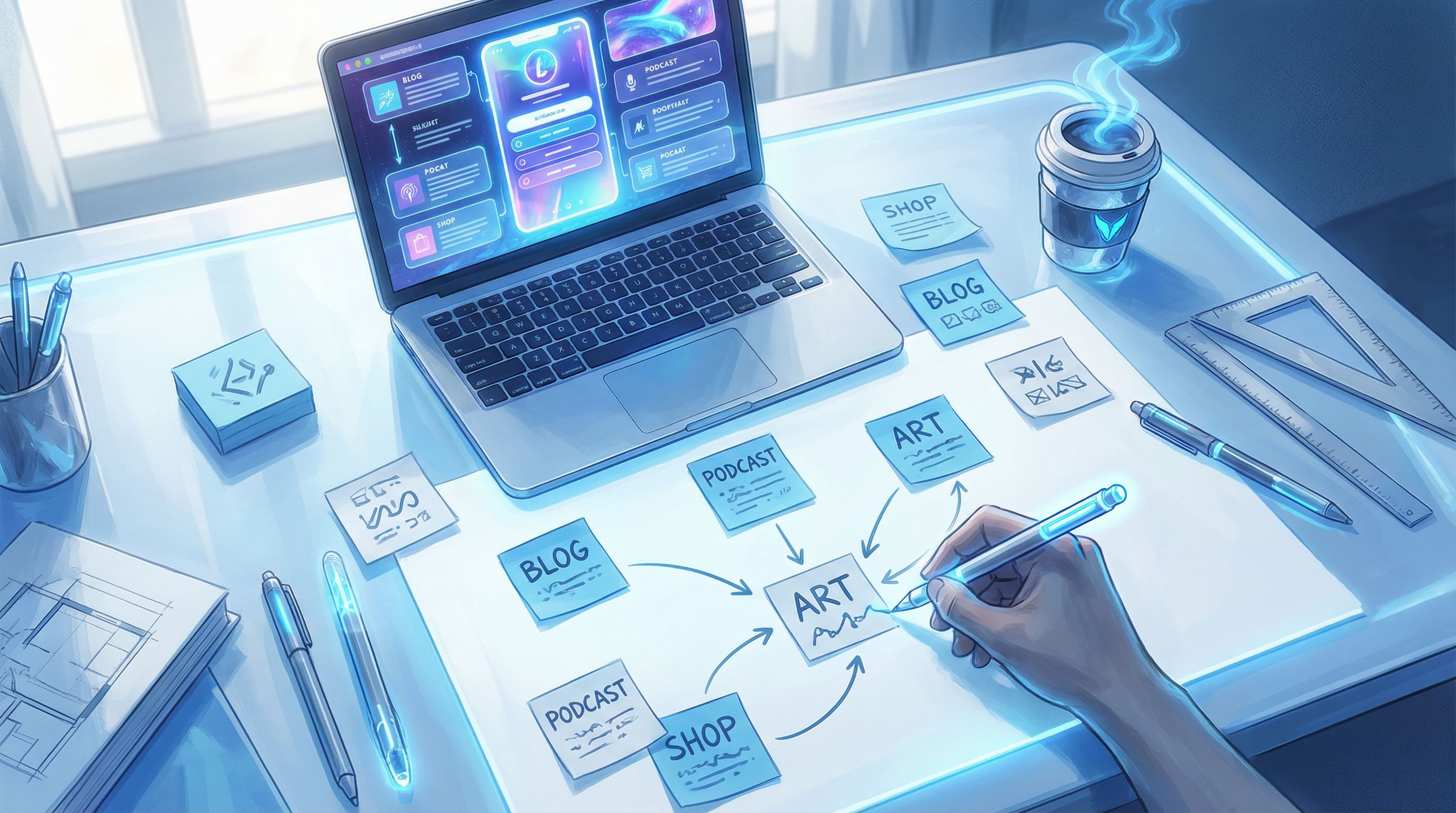
Now we turn your anchors into sections on your Liinks page.
Each section should:
- Have a descriptive, keyword‑rich heading
- Contain a small number of focused links (3–7 is a sweet spot)
- Make sense to a stranger who just Googled you
Example layout
Let’s say your anchors are: Productivity, Creator Tech, and Freelancing.
Your sections might look like:
-
Productivity for Creative Brains
Links to: Notion templates, time‑blocking tutorial, “plan your week” video, favorite planning tools. -
Beginner‑Friendly Creator Tech & Gear
Links to: YouTube gear list, mic comparison, lighting setup, affiliate storefront. -
Freelancing, Pricing & Client Systems
Links to: “how to price your services” guide, discovery call script, services page or booking link.
Write headings like a human, not a robot
Instead of:
- “Content”
- “Links”
- “Stuff I Do”
Try:
- “Notion & Systems for Creators Who Hate Spreadsheets”
- “Start Your Podcast: Gear, Tutorials & Templates”
- “Make Money as a Multi‑Passionate Freelancer”
You’re aiming for clear + specific + slightly fun.
If you want help shaping this for skimmers, pair it with SEO for Attention Spans Under 8 Seconds: Structuring Your Liinks Page for Skimmers, Scrollers, and Serial Multi-Taskers.
Step 4: Name Individual Links Like Mini SEO Pages
Every button on your Liinks page is a tiny SEO opportunity.
Instead of:
- “New video!!”
- “Freebie”
- “My gear”
Use descriptive, search‑friendly titles:
- “Notion Weekly Planner Template for Creators”
- “Beginner Podcast Gear Under $200 (My Exact Setup)”
- “Freelancer Pricing Calculator (Google Sheets)”
Quick naming checklist
Before you hit save, ask:
- Would a stranger know what this is?
- Does it include at least one word someone might actually type into Google?
- Does it sound like something I would say?
Bonus: this also makes your page way more bingeable—more like a Netflix menu, less like a cable TV guide. If you want to lean into that effect, you’ll love From Bio Link to Binge Session: Structuring Your Liinks Page Like a Netflix Queue (So People Don’t Bounce).
Step 5: Connect the Dots for Google With Internal Linking
You don’t need a 30‑page website to help Google understand how your topics relate. You can:
- Link from your content to your Liinks hub
- Make that hub clearly organized by anchor topics
- Occasionally link between things that naturally connect
Simple internal linking moves
-
In your content descriptions (YouTube, podcast, blog):
- “Get all my Notion templates and productivity tools here → [your Liinks URL]”
- “Full gear list + updated recommendations live on my Liinks page.”
-
Inside your Liinks page itself:
- If you have a “Start Here” section, link to your main anchors from there.
- Use one “Essentials” link per anchor, like: “All my Notion resources in one place.”
This helps both humans and search engines see patterns: “Oh, this person consistently talks about Notion, beginner creator gear, and freelance business. Got it.”
Step 6: Use Your Liinks Page as a Testing Lab (Instead of Rebuilding Your Brand Every Month)
Multi‑passionate brains are idea factories. The danger is rebuilding your entire online presence every time you get obsessed with something new.
Instead, use your Liinks page as a low‑stress testing lab:
- Add a link for the new topic under the closest anchor.
- Give it a clear, keyword‑rich title.
- Mention it in a few posts, Reels, or stories.
- Watch what people actually click.
If it performs well over a few weeks:
- Promote it higher in the section
- Create more content around it
- Consider turning it into a new sub‑anchor
If it flops:
- No dramatic rebrands required
- Just quietly archive or move it lower on the page
Your SEO strategy evolves with you, instead of fighting you.
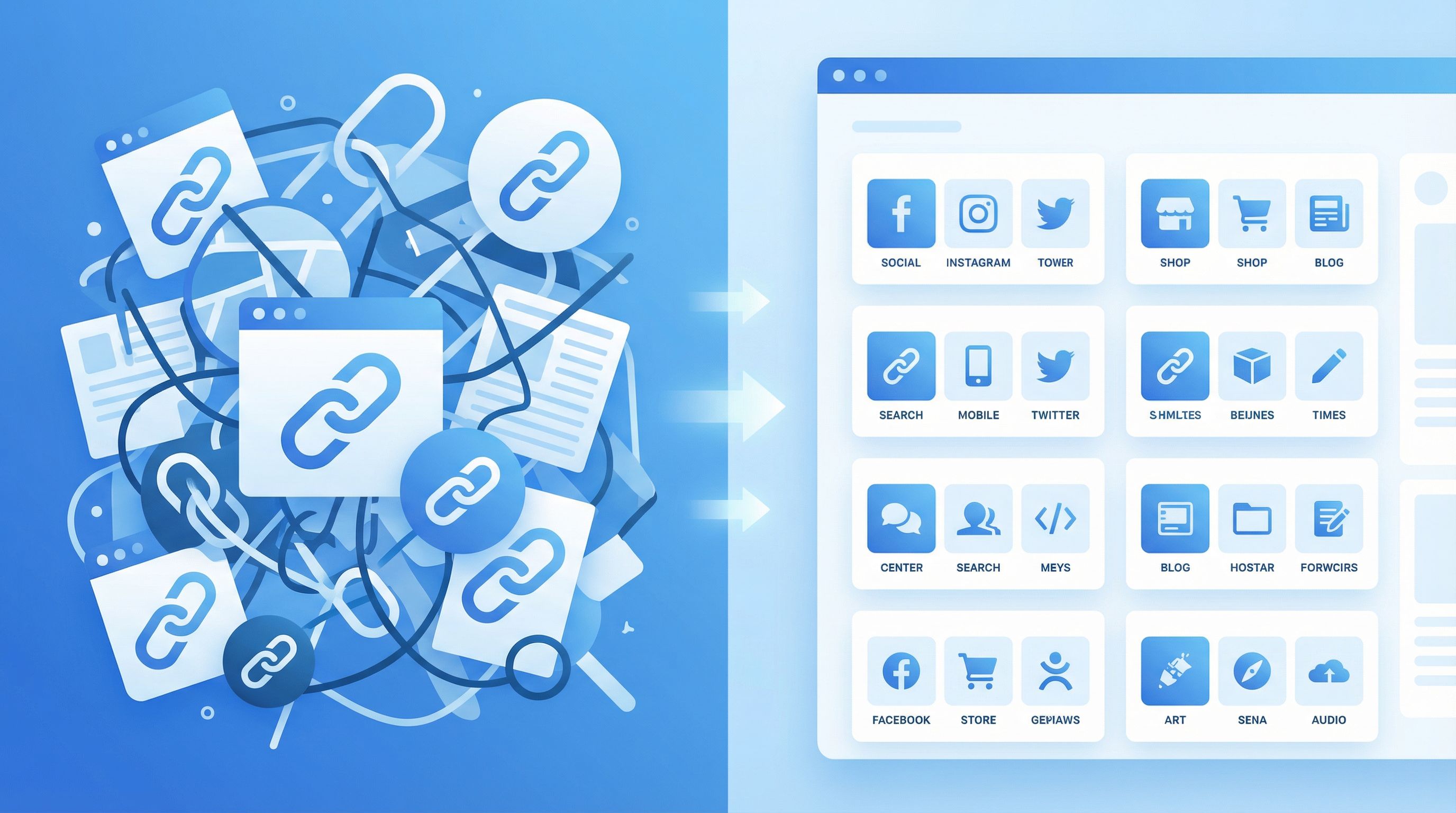
Step 7: Make Design Choices That Help You Rank (Without Becoming a Developer)
Good news: you don’t need to touch code to make design decisions that quietly support SEO.
A few design moves on your Liinks page can:
- Keep people on the page longer (good signal)
- Help them find what they want faster (also a good signal)
- Make you look like a real, trustworthy human (the best signal)
Design moves that secretly help SEO
-
Clear visual hierarchy
Use headings, spacing, and maybe emojis to make your sections easy to scan. -
Consistent branding
Colors, fonts, and imagery that match your socials and offers. This reduces “Wait, am I in the right place?” bounces. -
Limit the chaos
Too many buttons = decision fatigue. Curate. You can always rotate links seasonally. -
Prioritize mobile readability
Most people are tapping your bio link from their phone. If they have to pinch‑zoom, they’re gone.
If you want to nerd out on how aesthetics and algorithms play nicely together, check out Aesthetic Meets Algorithm: How Design Choices on Your Liinks Page Quietly Boost SEO.
Step 8: Add “High-Intent” Paths for People Who Are Ready Now
SEO isn’t just about traffic. It’s about the right people finding you and taking the next step.
On your Liinks page, that means having obvious paths for people who are already:
- Ready to buy
- Ready to book
- Ready to binge your best content
Add at least one of each:
-
Buy/Book Now
- “Book a strategy call”
- “Shop my Notion templates”
- “Join the membership”
-
Binge the Good Stuff
- “Start here: my best tutorials”
- “Most‑watched videos for new creators”
-
Stay in Your Orbit
- “Get my weekly creator systems newsletter”
- “Join the community / Discord / Patreon”
This turns your SEO wins into subscribers, clients, and customers—not just pageviews. For a deeper dive into attracting people who are ready to act, not just browse, pair this with The High-Intent Link in Bio: How to Attract People Who Are Ready to Buy (Not Just Browse).
Step 9: Keep It Fresh Without Burning Out
Google likes signs of life. So do humans.
You do not need to overhaul your Liinks page every week. But you do want to:
- Add new links when you publish a standout piece of content
- Retire outdated stuff (old launches, expired freebies)
- Re‑order links so your best performers stay near the top
Easy maintenance routine:
- Weekly (5 minutes): Add any new must‑see content, remove anything that’s truly dead.
- Monthly (10–15 minutes): Re‑order sections based on what you’re promoting and what’s getting clicks.
- Quarterly (20–30 minutes): Revisit your anchors. Are these still the topics you want to be known for? Adjust headings and intros if needed.
Think of your Liinks page as a living “greatest hits” album, not a dusty archive.
TL;DR: You Can Be Multi‑Passionate and Searchable
Let’s recap your game plan:
- You don’t need one niche. You need 3–5 anchor topics that your best‑fit audience actually cares about.
- Your Liinks page is your SEO anchor. Use your title and intro to clearly state who you are and what you talk about.
- Turn chaos into themed sections. Group links under descriptive, keyword‑rich headings.
- Name links like mini SEO pages. “New video” becomes “Beginner YouTube Gear Setup for Small Spaces.”
- Use your page as a testing lab. Try new topics without rebranding your entire life.
- Let design do some SEO work. Clear structure, good vibes, and mobile‑friendly layouts keep people around.
- Create high‑intent paths. Make it obvious how to buy, book, or binge.
You’re not “too all over the place” for SEO. You just need a hub that makes your everything look intentional.
Your Next Tiny Step (That Your Future Self Will Thank You For)
Don’t go build a 40‑page site. Don’t open 12 SEO tutorials.
Do this instead:
- Open your Liinks page.
- Write a new title and 2–4 sentence intro that name your 3–5 anchor topics.
- Rename your top 5 links so they’re specific, clear, and search‑friendly.
That’s it. That’s your first SEO win as a multi‑passionate creator.
Once you’ve done that, come back to this guide and tackle sections and layout. Or, if you’re starting from scratch, spin up a fresh page with Liinks and give your many‑topic brain the tidy, powerful home base it deserves.
Your content can be about everything. Your hub just needs to make sense.
Go make it happen.